Cotonou's Port Advantage: What American Logistics Managers Need to Know About West Africa's Quiet Trade Gateway
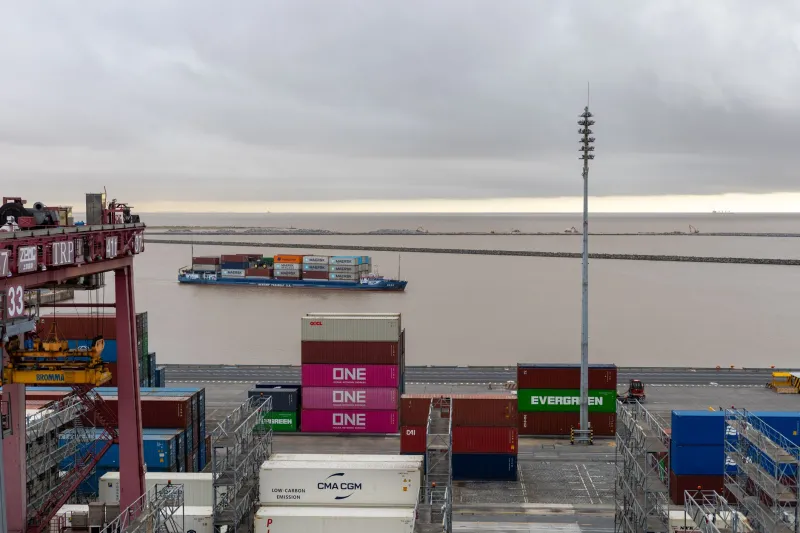
For American companies operating in West Africa, the default instinct has long been to anchor logistics operations around Nigeria's Apapa Port in Lagos or Côte d'Ivoire's Abidjan terminal. Both are large, well-connected, and familiar. Both are also chronically congested, unpredictable in their processing times, and increasingly expensive. A growing number of U.S. supply chain managers are quietly reconsidering that default — and their alternative of choice is the Port of Cotonou in Benin.
This is not a fringe trend. It is a measured, data-driven shift driven by cost pressures, regional market expansion goals, and a port authority that has made deliberate investments in capacity and efficiency. For American companies looking to reach not just Benin itself, but the vast landlocked interior of West Africa, Cotonou deserves a prominent place in the strategic conversation.
Why Cotonou Is on the Radar
The Port of Cotonou handled approximately 12 million tons of goods in 2023, a figure that reflects steady growth over the past decade. Its location on the Gulf of Guinea gives it natural access to deep-water shipping lanes, and its proximity to Benin's northern border corridors — particularly the road networks linking to Niger, Burkina Faso, and Mali — makes it a viable transit hub for goods destined well beyond Benin's own 13 million consumers.
For American exporters shipping manufactured goods, agricultural inputs, or consumer products to West African distributors, the math is increasingly favorable. Vessel dwell times at Cotonou average between three and five days for standard containerized cargo under normal operating conditions — a figure that compares favorably with Apapa's well-documented delays, which can stretch to three weeks or more during peak periods.
The Benin government has also invested significantly in port modernization. The Autonomous Port of Cotonou (PAC) completed a container terminal expansion in recent years that increased annual capacity to over 600,000 TEUs (twenty-foot equivalent units). A new roll-on/roll-off terminal has made the port more accessible for American automotive and heavy equipment exporters. These are not cosmetic improvements — they represent a genuine upgrade in throughput capability.
Navigating Customs: A Practical Overview for U.S. Shippers
Any honest assessment of Cotonou must include a candid discussion of customs procedures, which remain one of the more complex elements of doing business through the port. Benin's customs framework operates under the ECOWAS (Economic Community of West African States) common external tariff, meaning that American companies will encounter a familiar regional structure — but local implementation details matter enormously.
The Single Window system, known as GUICHET UNIQUE, has been operational in Cotonou since 2013 and has meaningfully reduced the number of agencies that importers must interact with directly. Pre-arrival documentation submission is strongly recommended. American shippers who work with a licensed Beninese customs broker — a category of professionals well represented in the Benin Phone Book directory — typically report smoother clearance experiences than those who attempt to navigate the process independently.
Key documentation requirements for U.S. exporters include a commercial invoice, bill of lading, certificate of origin, and packing list. Certain product categories — food items, pharmaceuticals, and electronics — require additional certification from Benin's relevant regulatory agencies. Engaging a local freight forwarder early in the planning process is not optional; it is a practical necessity.
Duty rates vary by product classification. The ECOWAS common external tariff applies four bands: 0%, 5%, 10%, and 20%, with specific goods subject to supplementary levies. American companies should conduct a commodity-specific tariff analysis before finalizing landed cost projections.
Case Profiles: American Companies Rerouting Through Cotonou
Several U.S. companies operating in West Africa have begun routing a portion of their regional supply chains through Cotonou, though most prefer to keep operational details confidential. The patterns that emerge from industry conversations are instructive.
A U.S.-based agricultural input company supplying fertilizer and seed products to Sahelian markets shifted a portion of its Niger-bound shipments from Lagos to Cotonou beginning in 2021. The primary driver was transit time reliability. While the overland distance from Cotonou to Niamey is comparable to the Lagos route, the company found that predictable port clearance in Cotonou allowed for tighter inventory management and reduced the cost of in-country buffer stock.
A separate American consumer goods importer serving the Burkinabè market reported that routing through Cotonou reduced its average total logistics cost per container by approximately 12 to 18 percent compared to the Abidjan route, once port fees, dwell-time-related demurrage charges, and overland trucking costs were factored together.
These are not universal outcomes. Product type, shipment frequency, and the specific capabilities of local logistics partners all influence results significantly. American companies are advised to conduct a pilot shipment analysis before committing to a full routing change.
Infrastructure Improvements Shaping the Future
Benin's government has articulated an explicit ambition to position Cotonou as West Africa's premier transit port. The Benin Révélé national development program includes infrastructure investments in road corridors connecting the port to northern border crossings, as well as upgrades to the Cotonou-Parakou railway line, which, when fully rehabilitated, would dramatically improve bulk cargo movement to the interior.
A new economic zone adjacent to the port — designed to attract light manufacturing and logistics value-added services — is also under development. For American companies considering a physical presence in West Africa, this zone merits attention as a potential base for regional distribution operations.
The port authority has also expanded its cold chain facilities, a development of particular relevance to American food and pharmaceutical exporters. Temperature-controlled storage capacity, while still limited relative to major global hubs, has grown meaningfully and is expected to continue expanding.
Building Your Cotonou Contact Network
Successful logistics operations through any port depend on the quality of local relationships. In Cotonou, the key professional categories for American companies to identify early include licensed customs brokers, freight forwarders with transshipment experience, bonded warehouse operators, and overland trucking companies with proven corridor experience.
The Benin Phone Book directory provides a structured starting point for identifying vetted service providers across each of these categories. American logistics managers planning their first Cotonou-routed shipment should treat the process of building a local contact network as a strategic investment — one that pays dividends across multiple shipments and, over time, across multiple product lines.
Cotonou is not the right answer for every U.S. company with West African supply chain needs. But for those whose markets include landlocked Sahelian countries, whose shipment volumes are growing, or whose current routing is generating unacceptable delay and cost variability, it is a serious option that deserves rigorous evaluation. The port's trajectory is upward, its infrastructure is improving, and its competitive position relative to regional alternatives is strengthening. American logistics professionals who get familiar with Cotonou now will be better positioned as West Africa's trade volumes continue to grow.